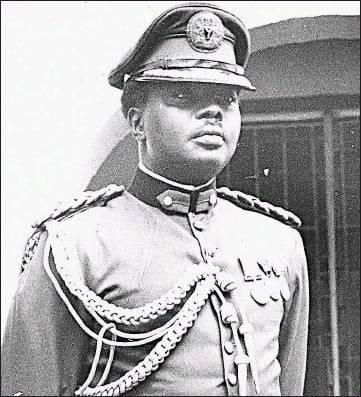
SETTING THE RECORD STRAIGHT ON THE BACKGROUND OF MURTALA MUHAMMED
March 21, 2026 | News
The origin and family background of Murtala Muhammed are widely documented
SETTING THE RECORD STRAIGHT ON THE BACKGROUND OF MURTALA MUHAMMED
-By Zik Gbemre
The origin and family background of Murtala Muhammed are widely documented. However, there are alternative accounts that present a different perspective.
According to this account, Murtala Muhammed’s father was Chief Erhue of Okpara Waterside Town in present-day Ethiope East Local Government Area of Delta State. Chief Erhue was employed by the Nigerian Railway Corporation in Kano, where he married a Kano indigene. Following his retirement, he reportedly returned to his hometown, while his wife, finding it difficult to adapt to village life, went back to Kano, leaving young Murtala behind to complete his primary school education in the community.
It is further claimed that after completing his primary schooling, his mother returned to take him back to Kano, where he continued his upbringing. This version of events also suggests that Chief Erhue had little or no involvement in his son’s life thereafter.
According to the same sources, during the agitation for the creation of Delta State, Chief Erhue, alongside other Urhobo leaders, reportedly visited Murtala Muhammed at his office in Dodan Barracks, Lagos. It is alleged that upon recognizing his father, Murtala reacted angrily and dismissed him, accusing him of reappearing only after he had become Head of State.
Additional claims suggest that the wife of David Ejoor was a primary school classmate of Murtala Muhammed, a detail which, according to the source, may be independently verified.
This account is drawn from personal interactions and interviews with Major General David Ejoor at his residence in Warri, as well as conversations with John Obada at his home in Agbarho. One such visit took place on January 1, 2020, during which General Obada hosted my family and reflected on past events and his associations within the Nigerian military.
While this narrative differs from widely accepted historical records, it represents an oral account from individuals who were closely connected to key figures of that era. It is presented here as a contribution to ongoing discussions about Nigeria’s history, with the aim of encouraging further inquiry and documentation.
Zik Gbemre
March 21, 2026
We Mobilize Others To Fight For Individual Causes As If Those Were Our Causes
-By Zik Gbemre
The origin and family background of Murtala Muhammed are widely documented. However, there are alternative accounts that present a different perspective.
According to this account, Murtala Muhammed’s father was Chief Erhue of Okpara Waterside Town in present-day Ethiope East Local Government Area of Delta State. Chief Erhue was employed by the Nigerian Railway Corporation in Kano, where he married a Kano indigene. Following his retirement, he reportedly returned to his hometown, while his wife, finding it difficult to adapt to village life, went back to Kano, leaving young Murtala behind to complete his primary school education in the community.
It is further claimed that after completing his primary schooling, his mother returned to take him back to Kano, where he continued his upbringing. This version of events also suggests that Chief Erhue had little or no involvement in his son’s life thereafter.
According to the same sources, during the agitation for the creation of Delta State, Chief Erhue, alongside other Urhobo leaders, reportedly visited Murtala Muhammed at his office in Dodan Barracks, Lagos. It is alleged that upon recognizing his father, Murtala reacted angrily and dismissed him, accusing him of reappearing only after he had become Head of State.
Additional claims suggest that the wife of David Ejoor was a primary school classmate of Murtala Muhammed, a detail which, according to the source, may be independently verified.
This account is drawn from personal interactions and interviews with Major General David Ejoor at his residence in Warri, as well as conversations with John Obada at his home in Agbarho. One such visit took place on January 1, 2020, during which General Obada hosted my family and reflected on past events and his associations within the Nigerian military.
While this narrative differs from widely accepted historical records, it represents an oral account from individuals who were closely connected to key figures of that era. It is presented here as a contribution to ongoing discussions about Nigeria’s history, with the aim of encouraging further inquiry and documentation.
Zik Gbemre
March 21, 2026
We Mobilize Others To Fight For Individual Causes As If Those Were Our Causes